What the words actually mean
"CRM automation" is sold with a lot of language that means nothing to someone running a plumbing company. Strip it back and there are only two ideas.
The CRM is one list of everyone who has ever contacted you, what they wanted, and what happened next. That is it. Not a system, not a philosophy — a list that lives somewhere other than a phone, a notepad, and one person's memory.
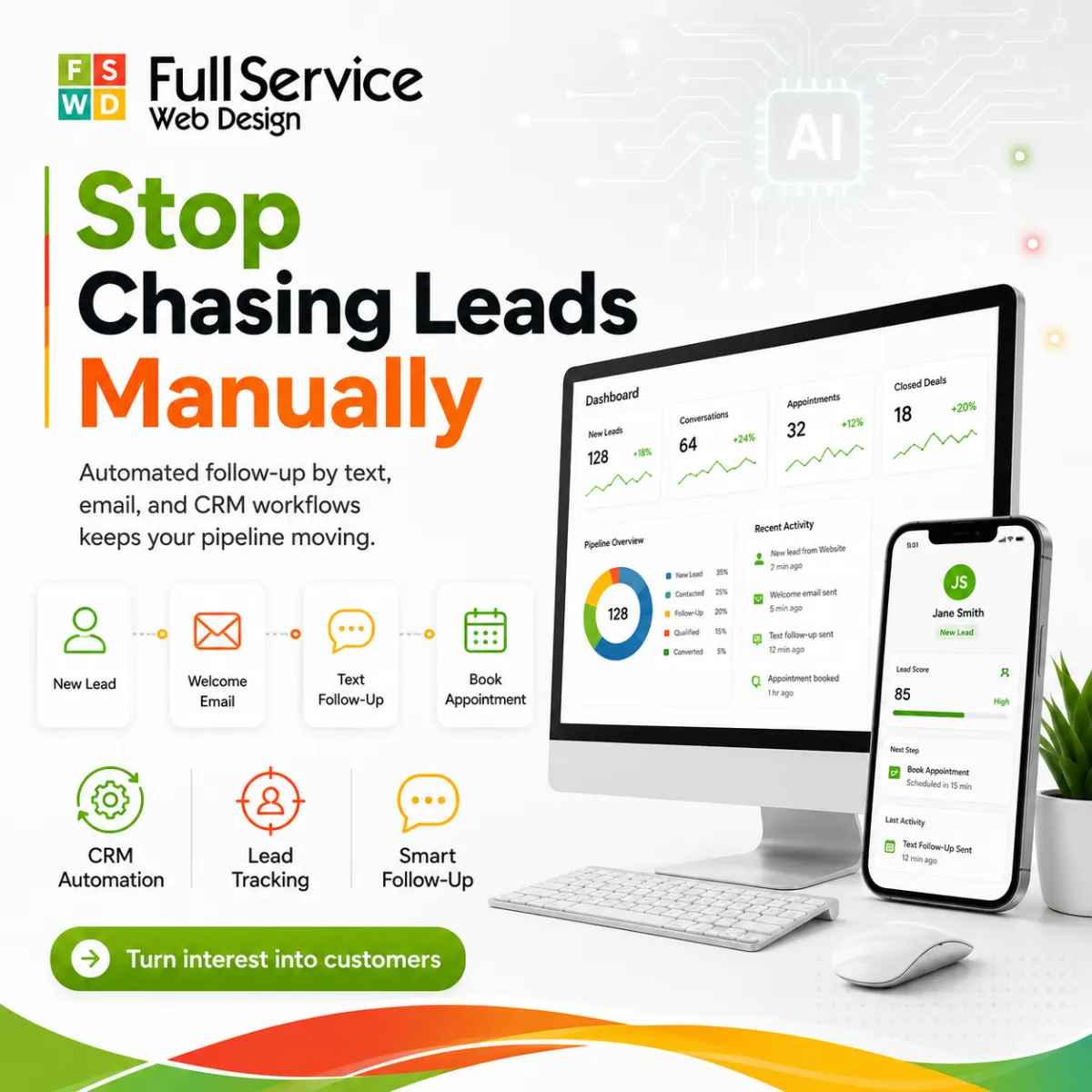
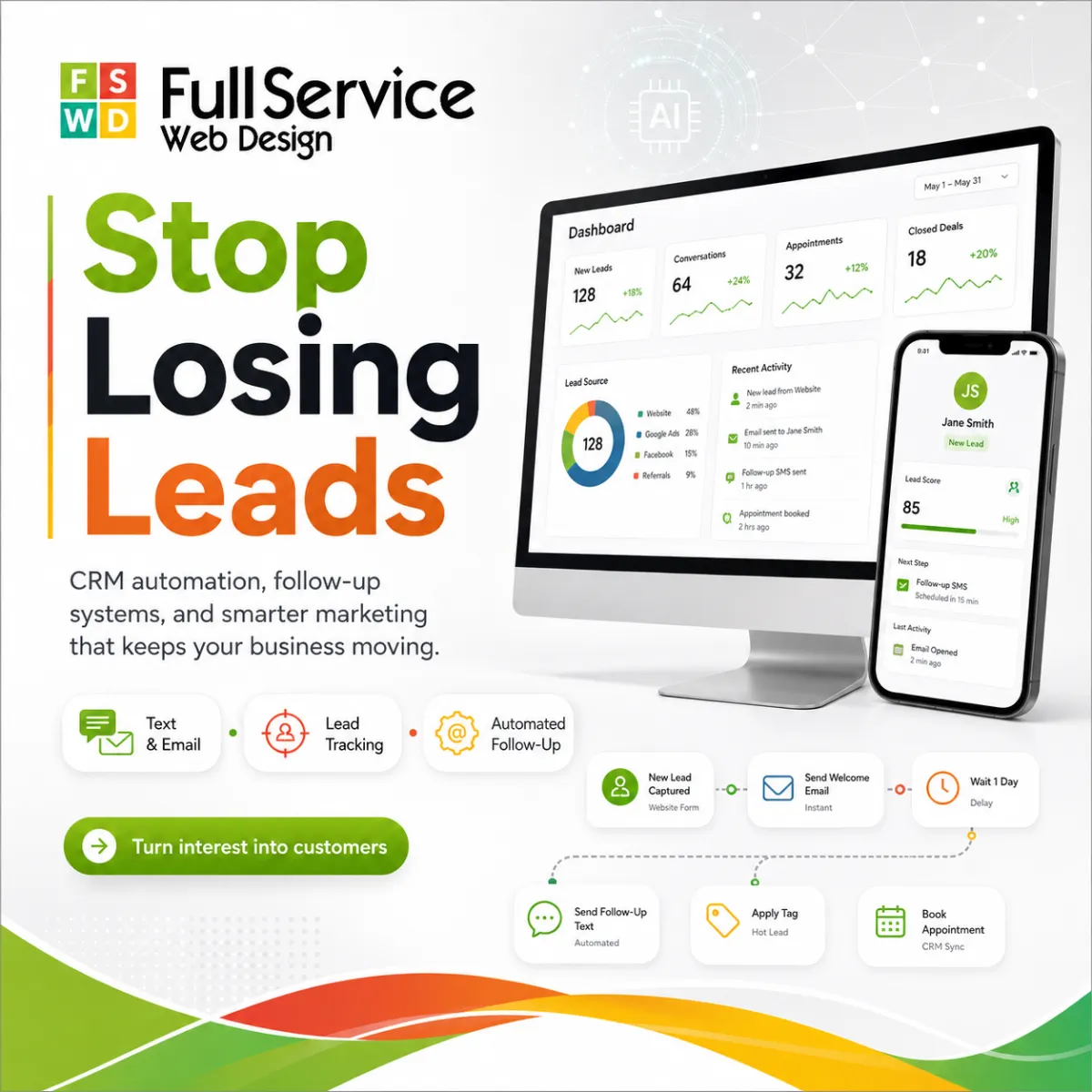
The automation is the set of things that happen to that list without anyone remembering to do them. A text goes out when a form is submitted. A reminder appears if nobody has replied in an hour. A follow-up fires three days after a quote with no answer.
That is the whole concept. Everything else vendors sell you is built on those two things.
Where the leads actually go
Almost nobody loses leads at the point of enquiry. They lose them in the hours and days after, in ordinary ways:
- The form email arrives while you are up a ladder. By evening there are nine other emails on top of it.
- Someone calls, gets voicemail, and calls the next company on the list instead. You never know they existed.
- A quote goes out, the customer means to reply, gets distracted, and neither side follows up. The job goes to whoever asked again.
- An enquiry arrives on Saturday. You see it Monday. They booked someone else on Saturday afternoon.
None of these are effort problems or attitude problems. They are memory problems, and memory is exactly what a system is for.
The three automations worth building first
You do not need a twelve-step nurture campaign. Almost all the value is in three things.
1. Instant acknowledgement. The moment a form is submitted, the enquirer gets a text and an email: we have it, here is who will call, here is roughly when. This one change does more than anything else on the list, because it occupies the window where the customer would otherwise carry on shopping.
2. An alert to a human, with escalation. The enquiry goes by text to whoever is on duty, not just to an inbox. If nobody has marked it handled within a set time, it goes to a second person. The point is not speed for its own sake — it is that no enquiry can quietly sit unclaimed.
3. Quote follow-up on a schedule. Two or three touches spread over a couple of weeks after a quote, ending in a clear "we will assume the timing is wrong and stop here". Most people do not chase quotes at all, because chasing feels like nagging. A system does it without ego and without forgetting.
What you should never automate
Automation applied to the wrong things does real damage, and the damage is invisible because the people it annoys simply leave.
- The actual conversation. An automated reply that pretends to be a person is worse than an obviously automated one. Say "this is an automatic confirmation" and then have a human follow.
- Anything after someone says no. Continuing to message someone who declined is how you become the company people warn their neighbours about.
- Emergency and complaint traffic. Nobody with a flooded kitchen or a real grievance wants a sequence. Route those to a human immediately and bypass everything else.
- Review requests before the job is finished properly. Asking for a review while a snag is outstanding produces exactly the review you deserve.
The legal part people skip
If you are going to text customers in the United States, get consent properly. That means the phone field on your form carries a clear line saying you may contact them by phone, email, or text about their request, with a way to opt out — and that "STOP" actually works and is honoured immediately.
This is not decoration. Texting people who never agreed to it is regulated under the TCPA, penalties are per message, and "the marketing company set it up" is not a defence. Any vendor who waves this away is telling you something important about how they operate.
Keep a record of when and how each person consented. Your CRM should store it automatically — that is one of the quieter reasons to have one.
What this realistically costs and returns
A workable setup for a small service business is a mid-tier CRM subscription plus a text-messaging allowance, and a one-off cost to wire the website, the phone, and the calendar into it properly.
The maths that matters is simple and you can do it yourself: take your average job value, and estimate how many enquiries a month currently go cold without a real reply. If your average job is worth a few hundred dollars and you are losing two or three a month to silence, the system pays for itself immediately. If your average job is worth twenty dollars and you lose none, it does not, and anyone telling you otherwise is selling.
We will do that arithmetic honestly on a call, including the version where the answer is that you do not need this yet.
Questions people ask about this
Can I not just use a spreadsheet?
For a while, genuinely yes — a maintained spreadsheet beats an unmaintained CRM. The point it stops working is when more than one person needs to see it at once, or when you want something to happen automatically. A spreadsheet cannot text a customer at 7pm on a Saturday.
Will customers know the first reply is automated?
Yes, and that is fine as long as you are not pretending otherwise. What people want to know is that the message landed and that a human is coming. An honest automatic acknowledgement delivers exactly that. Trying to pass a template off as personal is what damages trust.
What happens to the data if I stop using the system?
You should be able to export your full contact history to a standard file at any time, without asking permission. Confirm that before you sign anything. A CRM that makes your own customer list hard to leave with has made a deliberate choice about who it serves.
How long does setting this up take?
The technical wiring is usually a week or two. The part that takes longer is agreeing what should happen at each stage of your actual sales process, because most businesses have never written it down. That conversation is the valuable bit — the software just enforces whatever you decide.